
Verified Paso Robles City Directory Runs
The strongest published year evidence for a Paso Robles city directory comes from the Gale guide to the combined San Luis Obispo and Paso Robles regional reels. It identifies 1954, 1956, 1957, 1958, and 1960. The guide also shows missing years in the reel spans. It does not publish a complete local publisher history, so the table keeps the uncertainty visible instead of filling a gap with a catalog guess.
| Collection | Verified years | Where held | Access |
|---|---|---|---|
| San Luis Obispo and Paso Robles city directories | 1954, 1956, 1957, 1958, 1960 | Gale United States directory reels 35 to 37 | Microfilm guide; inspect the reel through a holding library |
| Physical “Directories” shelf | Volume years not published | Virginia Peterson Research Library | Onsite Tuesday and Thursday, 11 to 3, or appointment |
| HeritageQuest directory collection | Collection-dependent | Paso Robles City Library genealogy resources | Library database access |
| FamilySearch national city and business directories | Collection-dependent | FamilySearch search collection | Search and image access vary by item |
Reel 35 covers 1954 through 1957 with 1955 missing. Reel 36 covers 1957 through 1960 with 1959 missing, and reel 37 also identifies 1960. The guide names the regional places, not a complete Paso Robles shelf list or a confirmed publisher for every year.
Inside the Paso Robles Carnegie Basement
The Virginia Peterson Research Library is the best local place to ask what a Paso Robles volume contains. It occupies the lower level of the Historic Carnegie Library and History Museum at 800 12th Street. Volunteers work with directories, surname files, newspapers, school records, maps, tax rolls, obituaries, and house-history material. The collection is being catalogued in PastPerfect, with searching available on library computers.
Call 805-238-4996 or email pasohistory1@gmail.com before a research trip. The stated hours are Tuesday and Thursday from 11 a.m. to 3 p.m., with appointments available. Ask for a volume-level inventory, a microfilm or bound copy, and any local key for abbreviations. The public library's genealogy resource page is a separate access route for HeritageQuest and census material.
The Virginia Peterson Research Library source page describes the local shelves and research help.
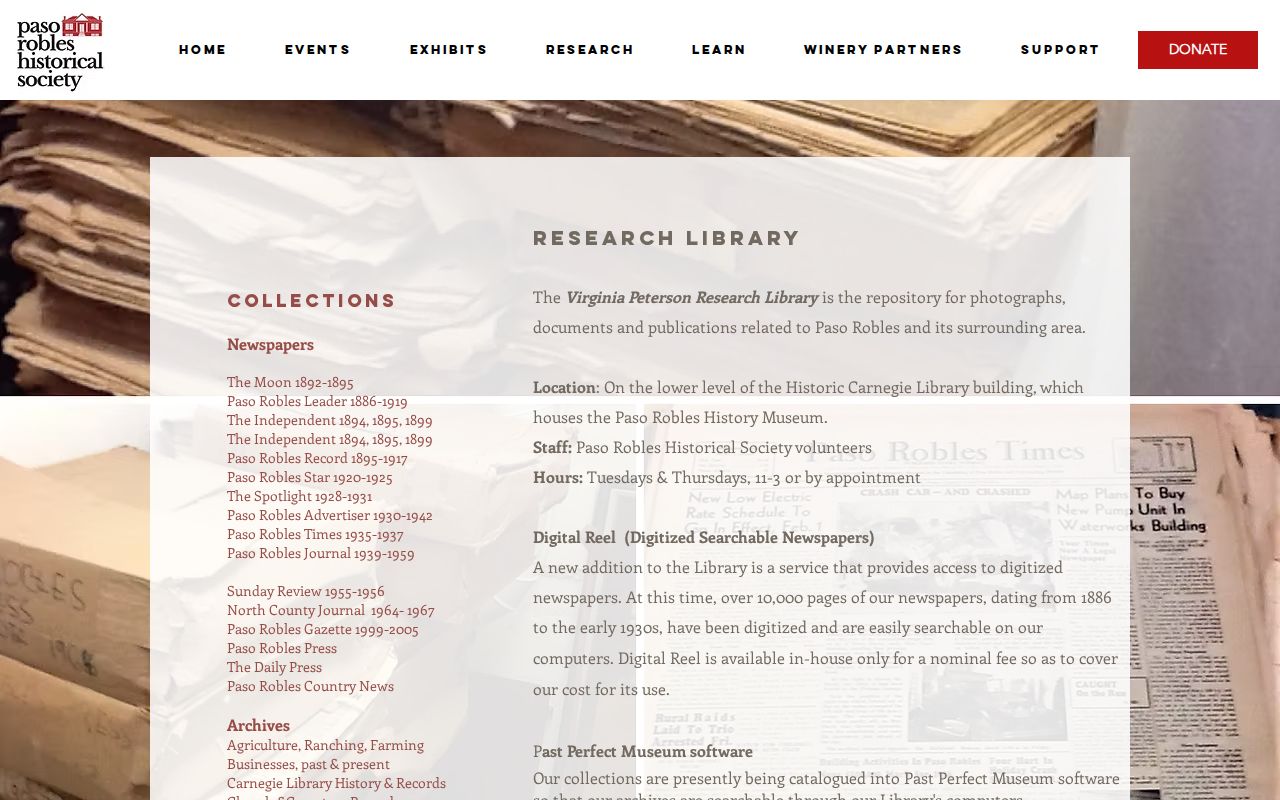
The Carnegie basement is where a broad directory question can be narrowed to a real volume, file, or newspaper run.
What the Paso Robles Directory Shelf Does Not Claim
The Historical Society page confirms “Directories” as a holding, but it does not publish every year or publisher. The Gale guide is the only verified volume-level source captured for the local region during research. A catalog lead that calls a volume “Polk” or assigns a year should be checked with the Society before it is presented as a confirmed local run.
This limit is helpful. It keeps the search honest. A researcher can cite the verified regional years, then ask a volunteer to inspect the physical shelf for a missing year. The same request can identify whether an address section, a criss-cross section, or a telephone arrangement exists. Do not promise a field that has not been seen in the actual volume.
Note: A missing catalog detail calls for a call to the Society, not an invented publisher, year, or entry format.
How a Paso Robles City Directory Entry Can Read
A printed entry is best transcribed before it is interpreted. The Library of Congress describes common elements such as a name, address, telephone, spouse, occupation, and alphabetical, street, telephone, or criss-cross arrangements. The Paso Robles volumes may use some of these features, but the inspected Gale item is a holdings guide rather than a digitized entry page. The field inventory below is therefore a checklist for inspection, not a claim that every local volume contains every line.
| Name | Copy the surname, given name, initials, and any household notation as printed. |
|---|---|
| Address | Record the house number and street, then note whether the volume has a street-order section. |
| Spouse or household clue | Keep parentheses, widow notation, or a second named person exactly as shown. |
| Occupation or business | Transcribe the stated trade or affiliation without assuming it proves a residence. |
| Telephone or mark | Record a phone field, ownership or residence mark, and abbreviation only if the volume uses it. |
- Criss-cross directory
- A street or address arrangement that can move from a place to a named entry.
- Householder index
- A name-based list centered on the person treated as the household head in that volume.
- Abbreviation key
- The volume's own guide to short marks, occupations, residences, or household notes.
- Index versus image
- A catalog or search hit points to an item; the scanned or bound page is the evidence to read.
Search Paso Robles and El Paso de Robles
Old directory work benefits from two place-name searches. Use “Paso Robles” and “El Paso de Robles” in a catalog, OCR field, surname file, and newspaper index. The formal name can sit in a title or heading even when a page uses the shorter form. A street or business may also appear under a rural or regional heading because the verified reels combine several communities.
The naming quirk is a practical interest point, not a footnote. If a search returns no Paso Robles directory hit, change the place form before changing the person's name. Then inspect the page image and compare the address with a deed, tax roll, or census entry. Keep the original spelling in the research note so another reader can repeat the search.
School Files for Paso Robles Family Reunions
The Carnegie collection adds a human-use path that a standard city directory search cannot provide. Paso Robles High School yearbooks, Bearcat newsletters, and class files cover 1931 through 1984. They can help separate people with the same name, place a former classmate in a year, or connect a family surname to an address or organization. These files are local research material, not a public roster of current people.
Use a yearbook as a dated clue. Copy the class year, name form, activity, and any address or family note that the item actually shows. Then compare the clue with a newspaper, directory year, obituary, or deed. A school file can support a reunion or family-history search without being stretched into a claim about a current household.
The Paso Robles City Library genealogy page identifies the database route that complements local school and directory files.
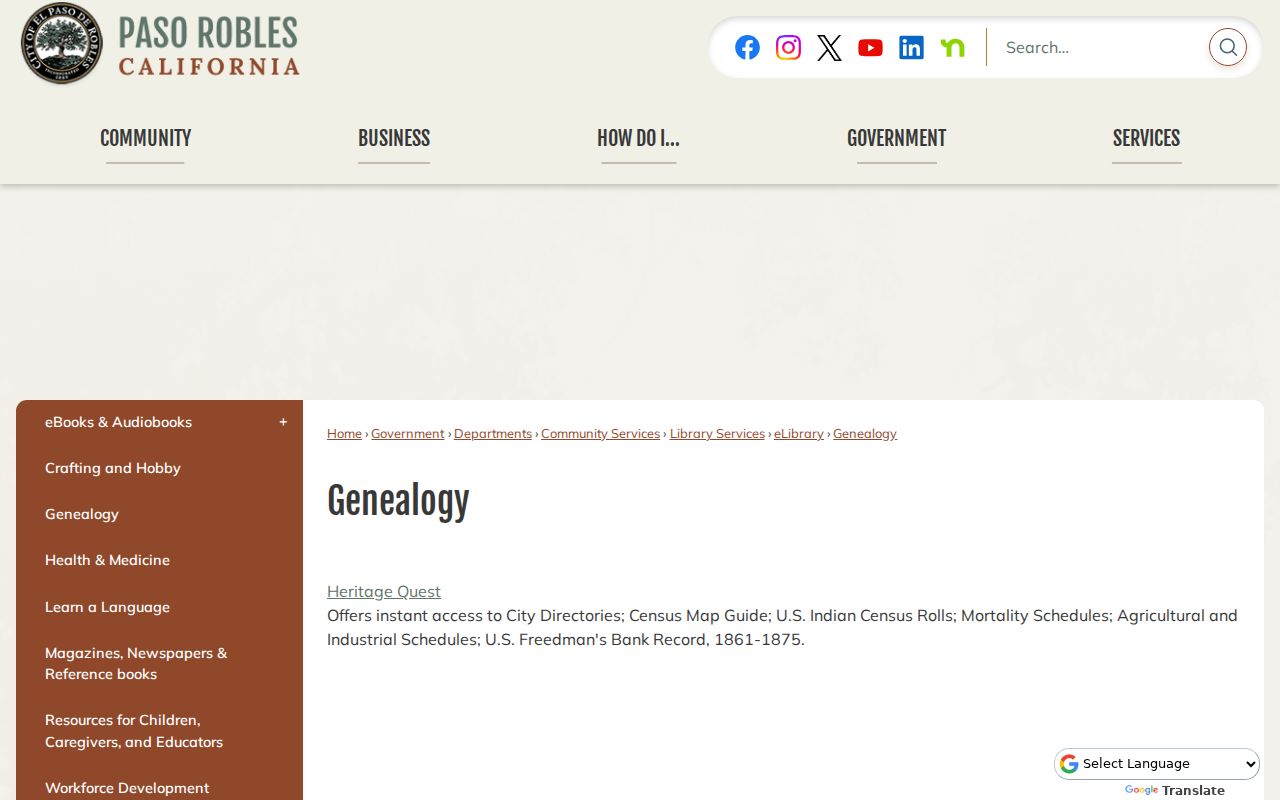
HeritageQuest and the local files serve different roles, so a good search uses both without treating either as complete.
More Than 10,000 Newspaper Pages Fill Directory Gaps
The Society's Digital Reel makes the historical Paso Robles collection unusually searchable. More than 10,000 local newspaper pages from 1886 into the early 1930s can be searched onsite for surnames, addresses, initials, schools, ranches, lodges, businesses, legal notices, obituaries, and estate clues. OCR is a finding aid. Check the page image because a bad scan or a name with an unusual type style can hide the right result.
The newspaper runs are title-specific. They include the Paso Robles Leader from 1886 to 1919, the Paso Robles Record from 1895 to 1917, the Paso Robles Star from 1920 to 1925, and the Paso Robles Journal from 1939 to 1959, among other listed runs. Those dates should guide a search, not create a claim that every issue survived. Ask the Society what is on paper, microform, or Digital Reel.
1892 to 1951 Tax Rolls Add a Second Paso Robles Trail
Tax assessment rolls at the Virginia Peterson Research Library reach from 1892 through 1951. They can bridge the gap between older deed books and the verified mid-century directory runs. The roll usually answers an assessed-owner or property question, while a directory may answer a person-to-address question. Put the two records side by side and preserve the difference.
For a house-history search, take the legal description from the tax statement, then compare the APN or parcel clues with the county recorder and the Historic Resources Inventory. The Society's Sanborn maps and house files add footprint and use context. These sources can show how a parcel changed without proving who occupied every room.
Pair a Paso Robles Directory Year With 1950
The 1950 federal population census is the newest public population schedule in the verified collection. Pair it with a 1954, 1956, 1957, 1958, or 1960 city directory year to make a dated household chain. Compare names, address, spouse notation, and occupation or business clues. The 1950 census can fill a directory gap, while the later volume can narrow a move or household change.
- Find the surname in the directory and transcribe the full entry and address.
- Search the matching or nearby census household, using both Paso Robles name forms.
- Repeat the directory search in the next verified year and record each address change.
- Use tax rolls, newspapers, deeds, or an obituary to test a move, death, or ownership change.
- Mark an absence as unresolved when publication gaps or omitted households could explain it.
The Library of Congress city-directory guide explains why street and criss-cross sections can add a second path through a volume. Inspect the local key before reading a short mark as a fact.
A Paso Robles Records Timeline
The directory collection sits inside a longer Paso Robles records story. Civic records, the public library, newspapers, tax rolls, and modern portals each arrived at a different time. A timeline helps explain why one decade is rich in paper and another is easier to search online.
| Period | Records clue |
|---|---|
| 1902 to 1908 | Reading room, public library growth, and the Carnegie building create a local research home. |
| 1892 to 1951 | Society tax assessment rolls preserve assessed-owner and property evidence. |
| 1931 to 1984 | High school yearbooks, Bearcat newsletters, and class files support family and reunion research. |
| 1954 to 1960 | Gale reels verify regional directory years with gaps in 1955 and 1959. |
| 1995 onward | The new library opens across the street and the Carnegie building becomes the historical research home. |
That timeline is why a Paso Robles directory is best used with other sources. The physical shelf, database, tax roll, and newspaper image each cover a different part of the trail.
The Library of Congress directory guide supplies the broader reading framework for city, street, telephone, and criss-cross volumes.
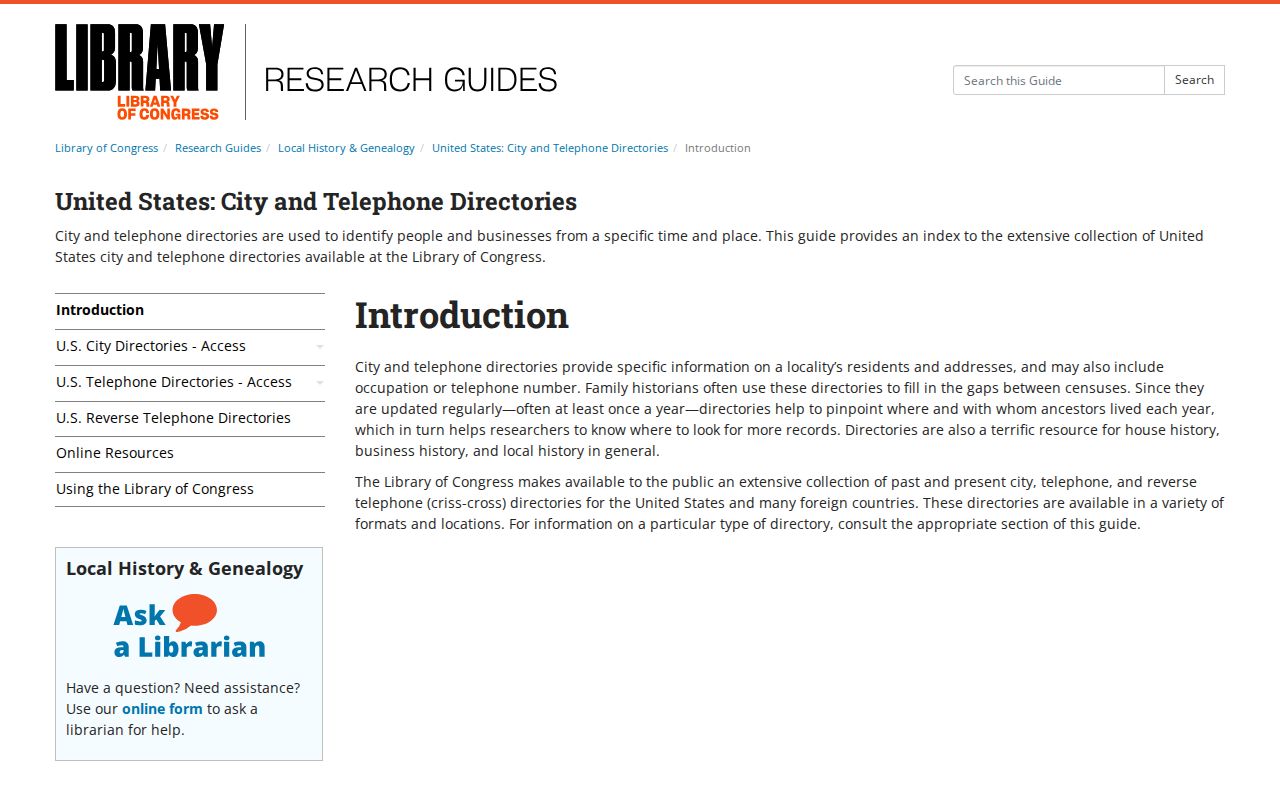
Its method helps a reader inspect a local Paso Robles volume without assuming that every publisher used the same fields.
Use the Historical Paso Robles Directory With Care
A directory hit can help a family-history search, a former-classmate reunion, or a study of a historic house. It does not certify a birth, prove current residence, or replace a deed. If the search shifts to a current parcel, use the address-keyed records in the Paso Robles street directory. If the goal is to confirm one person across modern sources, compare the city directory clue with the official records described in a resident lookup.
Transcribe the page, photograph or note the volume key, record the source and year, then verify the important link with the custodian record.