
Start a Paso Robles Resident Search
A Paso Robles resident search works best when the goal is clear. A current parcel question belongs with the San Luis Obispo County Assessor and the county parcel viewer. A past household calls for deeds, tax rolls, city directories, census schedules, and newspapers. A person tied to a court matter belongs in the Superior Court system, while a birth, death, or marriage question follows the Clerk-Recorder and California Department of Public Health rules. Each roll describes a role or event. None should be treated as a complete list of Paso Robles households.
Use the narrowest stable clue first. A full name plus an old street, an assessor parcel number, a spouse, a case number, a business name, or a year can separate people who share a surname. Keep a note of the source, the date, and the address label. A situs address marks the mapped land. A mailing address tells where notices go. A business or agent address describes a filing role. Those distinctions make the Paso Robles residents directory more useful and help keep a name match from becoming a false identity claim.
- Choose the question: current parcel, past household, family link, civic record, or one person.
- Search the San Luis Obispo County Property Information Search by APN or situs, or begin with the county recorder's name index.
- Use the relevant California or court lookup only within its stated access rule.
- Compare dates, roles, address labels, and legal descriptions across two independent custodians.
- When the web stops, ask for an identifiable record through the City Clerk, county counter, library, or archive.
Where Paso Robles Resident Records Sit
The offices behind a Paso Robles residents directory are spread across the city and county. The City Clerk handles municipal minutes, contracts, permits and other city-held records through the California Public Records Act. The San Luis Obispo County Clerk-Recorder handles deeds and county vital records. The Assessor and GIS viewer connect an address to a parcel. The Superior Court handles trial matters for the north county branch. For older names, the Virginia Peterson Research Library in the historic Carnegie building is the local fallback.
San Luis Obispo County Clerk-Recorder
1055 Monterey Street, Suite D120
San Luis Obispo, CA 93408
805-781-5080
San Luis Obispo County Assessor
Atascadero counter: 6565 Capistrano Avenue
Atascadero, CA
805-461-6143
Paso Robles City Clerk
City Hall, 1000 Spring Street
Paso Robles, CA 93446
805-237-3960
Virginia Peterson Research Library
Historic Carnegie Library, 800 12th Street
Paso Robles, CA
805-238-4996
Local history and house research
The San Luis Obispo County Clerk-Recorder service menu shows the county office behind deeds, vital records, and filings.
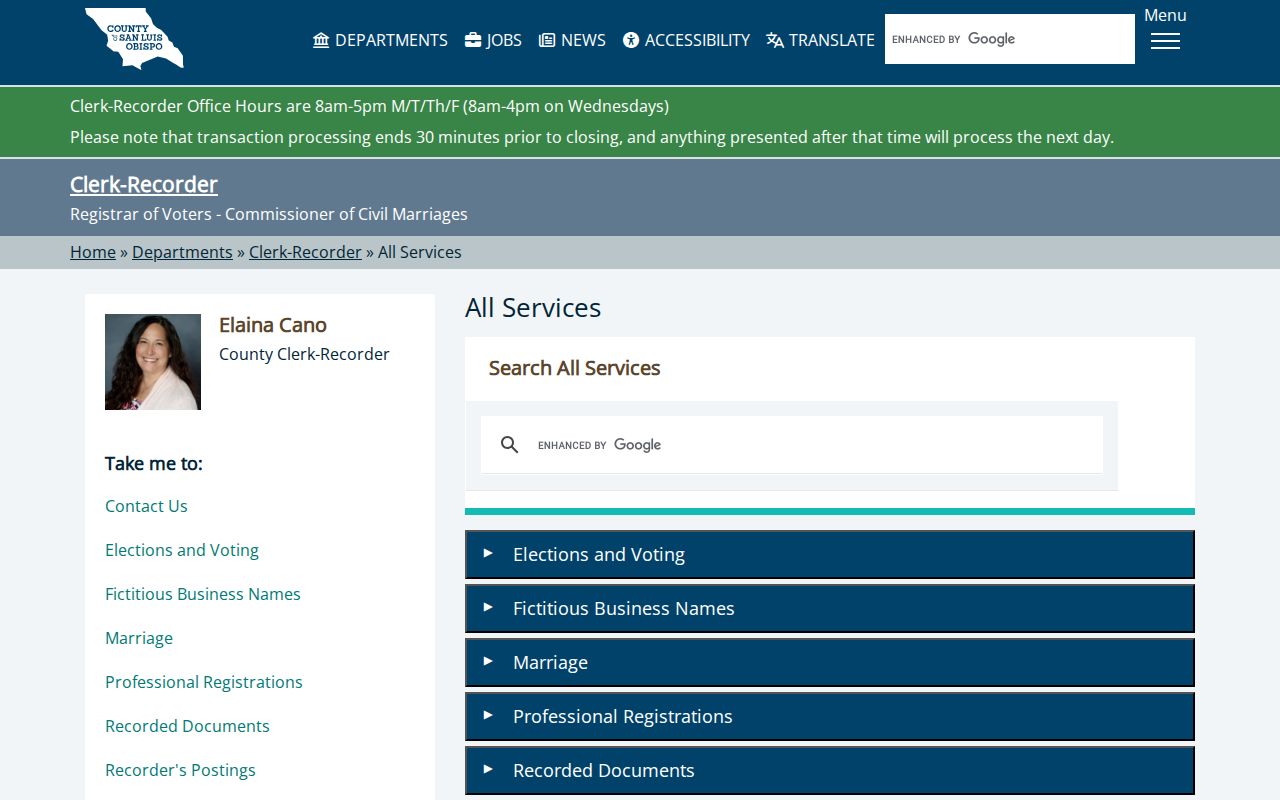
The county office supplies the central records route, while Paso Robles offices cover city-held material.
These offices do not publish one shared roster. Their boundaries matter. Paso Robles is in San Luis Obispo County, but the county seat is south in San Luis Obispo and north-county parcel questions can start at the Atascadero counter.
Four Ways to Search a Paso Robles Parcel
The county Property Information Search is the cleanest address starting point for a Paso Robles residents directory. Its four modes accept an APN, a situs string, an owner name, or a DBA name. A broad partial search can work better than a long exact string. Results can show APN, owner name, situs, and DBA when available, but the county warns that public web owner display is subject to access limits. Use the map and legal description to keep the parcel fixed as the name trail changes.
| Search field | Type | Required | What it helps locate |
|---|---|---|---|
| APN | Text | No | Full or partial parcel number; non-digits are ignored. |
| Situs | Text | No | Street number, street name, and abbreviated city. |
| Owner Name | Text | No | Full or partial character sequence where display is allowed. |
| DBA Name | Text | No | Full or partial business name tied to a parcel. |
The result row is a lead, not proof of who lives there. Open the selected property when the portal permits it, then compare the parcel in the SLO County Parcel Viewer. A trust, entity, remote mailing address, or business label can explain why a parcel owner and an occupant are not the same person.
Three Paso Robles Address Labels
Address words do more work in Paso Robles than a simple street search suggests. The county GIS map may show a planning or site address, while the assessor uses a situs field and sends tax notices to a separate mailing address. A deed may preserve a legal description even when a postal string changes. The assessment number is another bridge. Its nine digits encode assessor book, page, optional block, and parcel, with book 008 identifying Paso Robles city assessment geography.
- Situs address
- The mapped physical location of the parcel or improvement.
- Owner mailing address
- The place used for tax or notice mail; it can be outside Paso Robles.
- Legal description
- The land description carried in a deed or tax record when street wording is not enough.
- APN
- The assessor parcel number used to join a map, assessment record, and deed trail.
For a current Paso Robles residents directory question, keep all four fields in the notes. The distinctions are also useful in family history because an old street name may point to the same parcel under a later postal form.
What California Voter Records Actually Open
California My Voter Status is a self-check for the registered voter who can authenticate with first name, last name, date of birth, and a California driver license, ID, or the last four digits of a Social Security number when held. It returns that voter's registration, party or language settings, polling information, and ballot status. It is not a public Paso Robles residents directory and cannot be used to browse a street or block.
Election Code §2194 limits voter-file release to approved election, scholarly, journalistic, political, or governmental purposes. A permitted file can contain a residential or mailing address, precinct, district, registration details, and participation history, but protected identifiers, signatures, protected voters, and ballot choices remain outside the release. The California Secretary of State describes the application, declared purpose, security statement, and fees on its voter file request page. A private name search is not a substitute for that process.
Note: My Voter Status confirms an authenticated record, while a voter-file request requires a permitted purpose and formal application.
Present-Day Paso Robles Directory Sources
Current Paso Robles directory sources list different relationships. The city staff directory gives public work contacts. The city business-license roll connects a business or licensee to a commercial site. The recorder index shows parties to recorded instruments. The assessor and GIS systems describe parcels. Court, license, and entity portals add other public affiliations. Put the role beside each name before treating it as a useful clue.
| Source | Who or what appears | Keeper | Access path |
|---|---|---|---|
| Property Inquiry Portal | Parcel, situs, owner or DBA when available | SLO County Assessor | Free web search; display limits apply |
| Recorded Documents index | Grantor, grantee, document type, date, number | County Clerk-Recorder | Free index; older images by office or order |
| City staff directory | Department and public business contact | City of Paso Robles | Free online search |
| Business-license roll | Business, location, phone, category, license fields | Paso Robles Finance | PDF and sortable sheet |
| Historical collection | Dated households, surnames, school and newspaper clues | Virginia Peterson Research Library | Onsite or by appointment |
The Paso Robles staff directory is a contact tool, not a residence list. The same care applies to the Chamber member directory and a professional license. If the real question is one named person, use a narrow match and verify it across records rather than merging every Paso Robles listing into one profile.
The Paso Robles staff directory shows the city contact source that belongs in the current directory landscape.
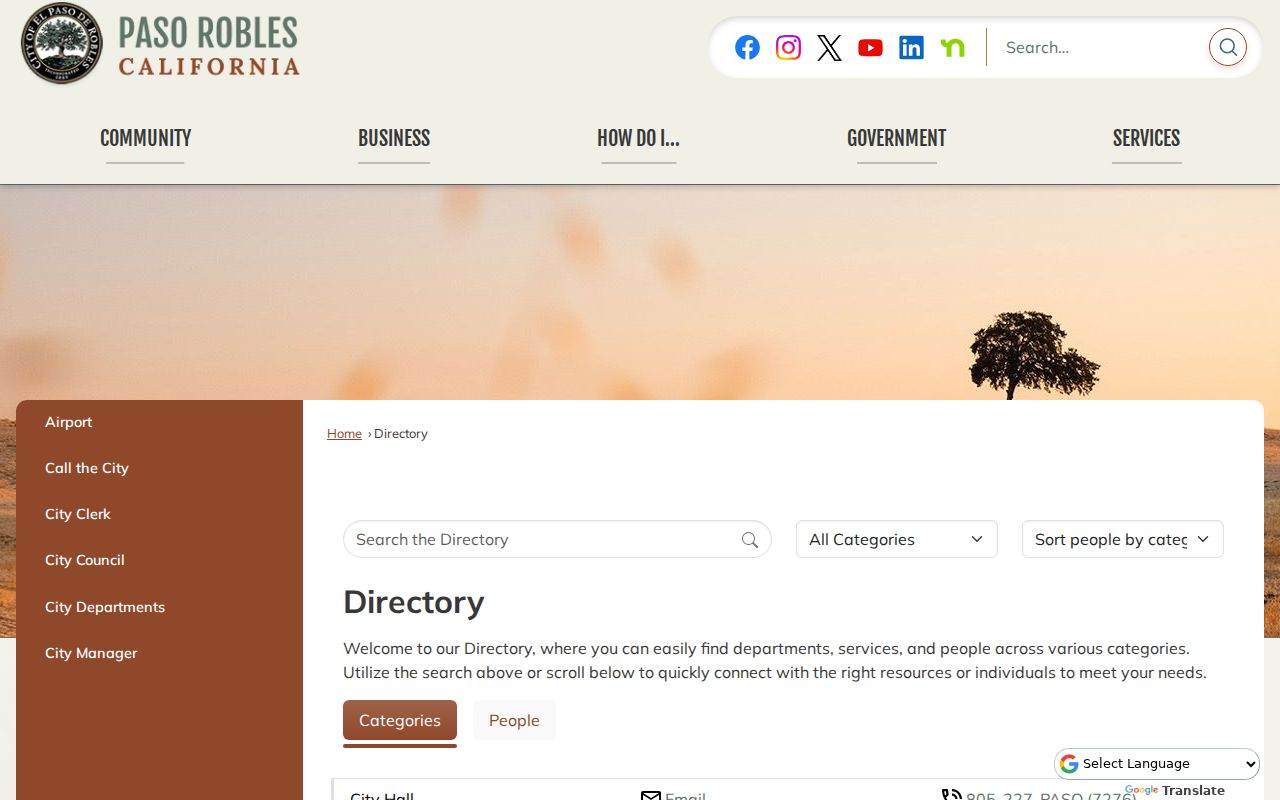
Public work contact information is useful for reaching an office, not for inferring a private residence.
When the Paso Robles City Clerk Is the Fallback
Some Paso Robles records are not exposed through a searchable name portal. The City Clerk accepts a request by PDF form, mail, in person, phone, or email. Describe an existing record by type, date, subject, title, address, parcel number, or permit number. The California Public Records Act lets any person request nonexempt city records. The normal determination period is ten calendar days under Government Code §7922.535, with a written extension for unusual circumstances.
Inspection during business hours is the low-cost route. The city lists paper copies at $0.20 per page or side and CD or DVD copies at $15 per disk; larger copy requests may carry actual outsourced cost and a deposit. A request cannot force staff to create a new list or answer a broad question. Ask for an existing permit export, agenda attachment, license roll, or GIS layer in its native electronic form when it exists.
For deeds and county records, use the San Luis Obispo County Clerk-Recorder service menu instead. For court files, the Clerk and Superior Court rules apply rather than the CPRA.
The Paso Robles City Clerk page is the city source for request channels and access rules.
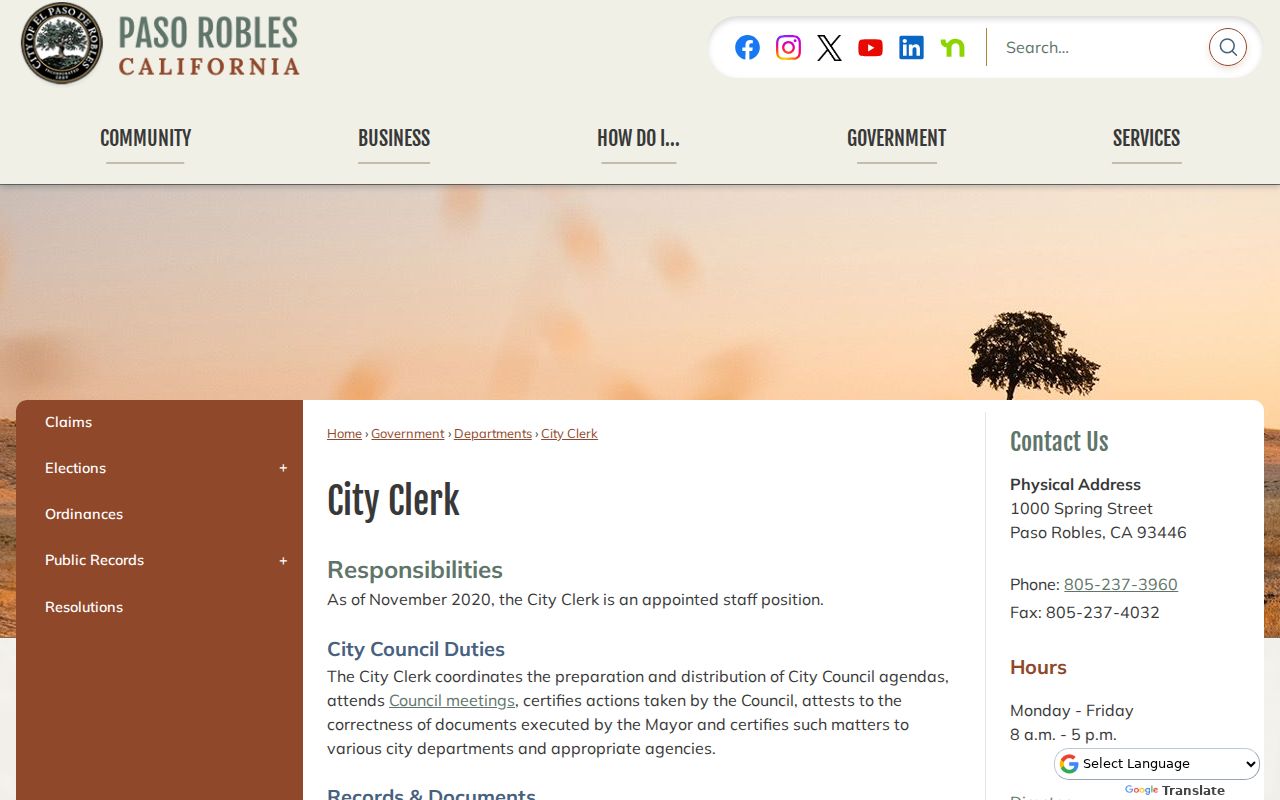
The City Clerk can identify a releasable existing record when a city portal does not expose it.
The California Public Records Act guidance explains requester and inspection rules that apply to the fallback.
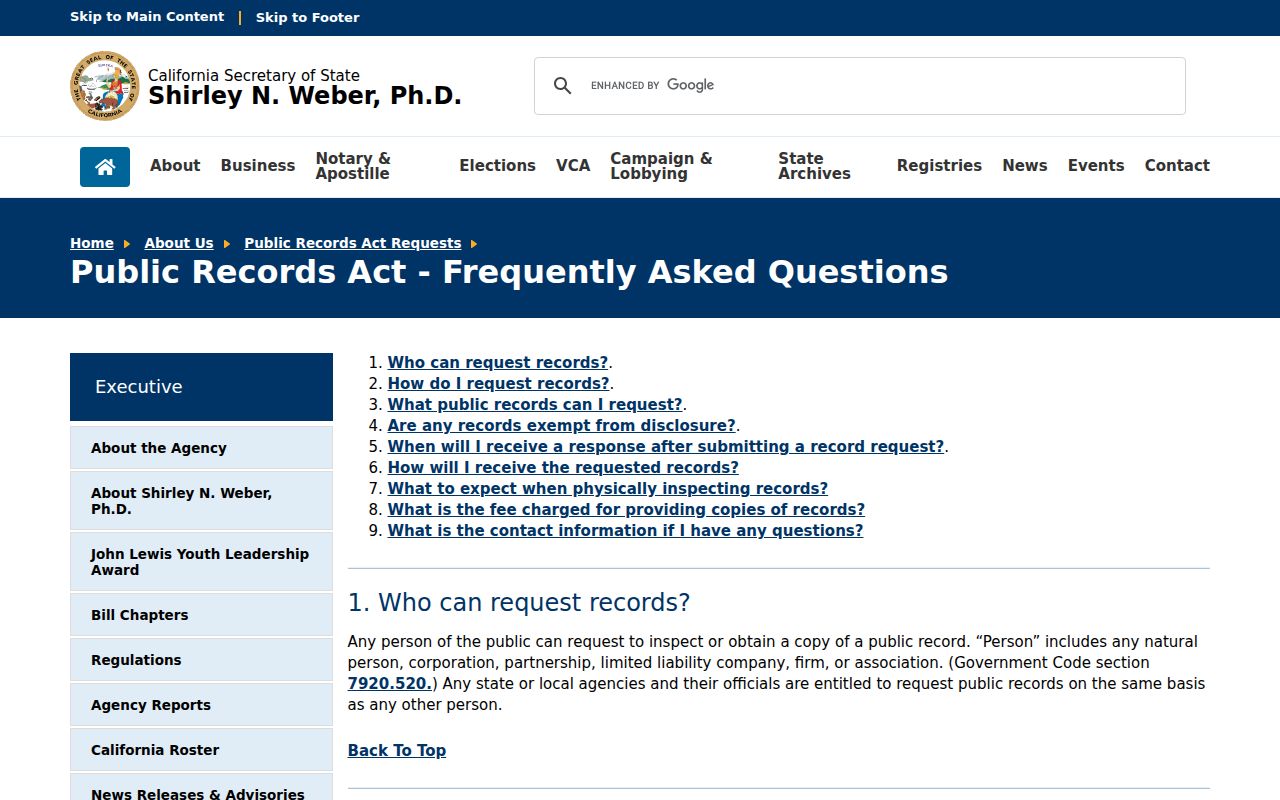
The state guidance complements the city procedure without replacing the custodian's own instructions.
Official Rolls Compared With Commercial Finders
A commercial people-finder service may gather public, licensed, and inferred data into one result, but it can merge people, carry stale addresses, or hide the date and source of a claim. Official Paso Robles records are slower because each custodian controls a different record and access rule. The choice should follow the question, not the promise of one large result.
| Official county or city record | Named custodian, stated fields, and a correction or copy path. |
|---|---|
| Historical collection | Strong date and place clues, but gaps, OCR errors, and onsite limits. |
| Commercial compilation | Fast aggregation, but uncertain freshness, source labels, and identity matching. |
Use public records for lawful personal research, family history, civic questions, and scam checks. Do not use a name or address trail to stalk, harass, intimidate, or harm anyone.
The Carnegie Building's Second Records Life
The Virginia Peterson Research Library gives Paso Robles a local records fallback that is more than a shelf of old books. A temporary free reading room began in 1902. A public library followed in 1903, municipal ownership in 1904, and a Carnegie grant helped produce the 1908 building. When the present library opened across the street in 1995, the Carnegie building became the historical museum and research home.
The Society's collection includes directories, surname files, tax assessment rolls from 1892 through 1951, Sanborn maps, house files, yearbooks, obituaries, church and cemetery material, and city annual reports from 1920 through 1964. Its newspapers span title-specific runs from 1886 into 1967, with more than 10,000 pages from 1886 into the early 1930s searchable onsite through Digital Reel. Those records make the Paso Robles residents directory useful for a past address even when no current web index can answer it.
The Paso Robles Library genealogy page adds HeritageQuest city directories and census resources. The two collections complement each other: the public library supplies databases, while the Carnegie basement supplies local files and volunteer help.
The Paso Robles public-records page shows the city request route that supports older Paso Robles directory research.
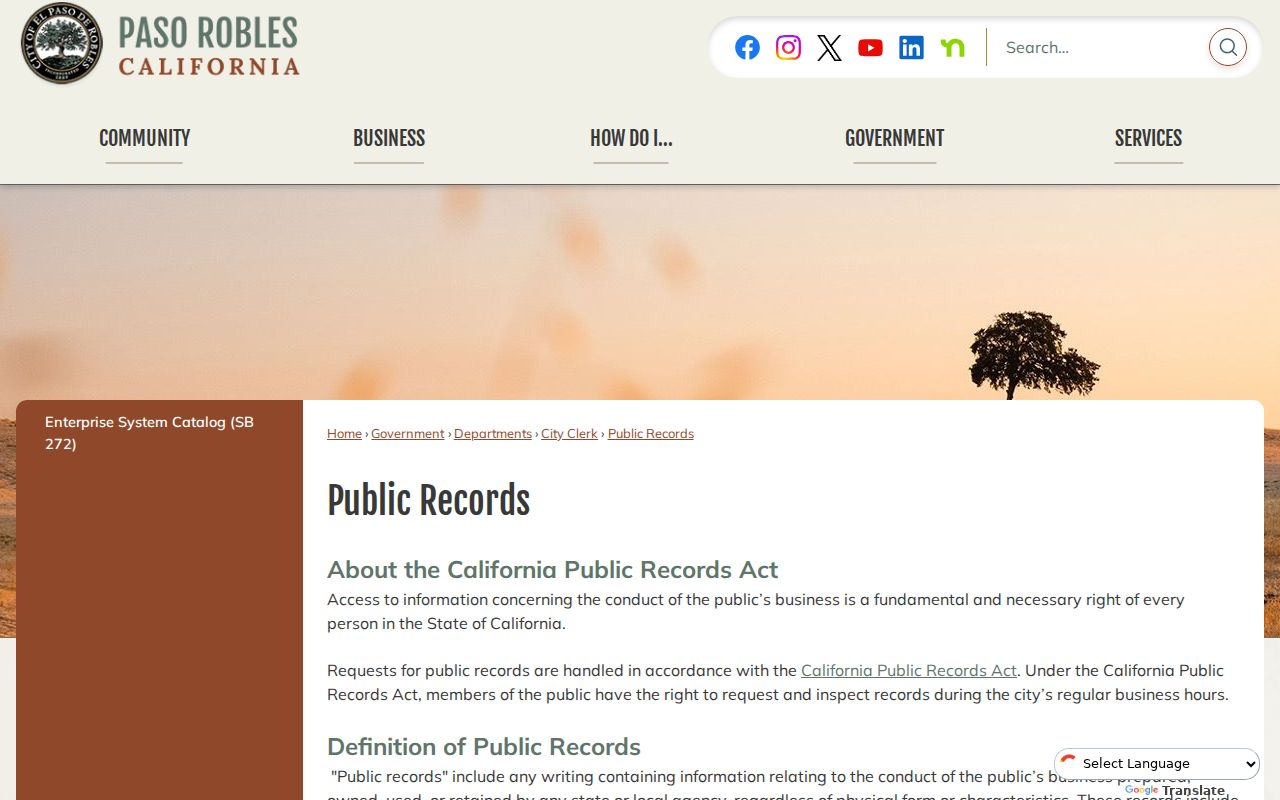
The city request route is a useful bridge when a name or address record is held offline.
Search Both Paso Robles Name Forms
Historical catalogs and newspaper OCR can use “Paso Robles” or the older formal name “El Paso de Robles.” Search both forms when a surname, street, or business does not appear on the first pass. The Census profile uses both forms, and the 1940 historical note returned the place as “Paso Robles.” A missing result may be a spelling or naming issue rather than proof that the person or parcel was absent.
The same tactic helps with initials, former surnames, hyphenated names, and rural addresses that later fell within an expanded city boundary. Copy an entry exactly before interpreting it. Then compare the date and address with a deed, tax roll, newspaper notice, or school file. Small naming shifts are common in the Paso Robles residents directory because the sources were made for different purposes.
From Current Records to Family History
A modern result can be the first link in a longer Paso Robles family-history chain. Start with a parcel, deed party, business affiliation, or court file. Add the 1950 federal census, then move across the verified 1954, 1956, 1957, 1958, and 1960 regional directory years. The Society's 1892 to 1951 tax rolls can bridge earlier decades, while newspapers add social notices, legal notices, obituaries, and estate clues. A directory disappearance can mean a move, death, omission, or a publication gap.
Keep ownership and occupancy separate. A deed proves a recorded transfer. A tax roll identifies an assessed owner. A directory offers a dated person-to-address clue. An obituary can connect relatives, but the estate or deed record is the stronger source for title. This layered method is especially helpful for heirs, former classmates, and people reconnecting with a family place.
Note: An absence from one Paso Robles directory year is a research clue, not proof that a household left the city.
Private Records and Lawful Paso Robles Use
California records access has clear boundaries. County birth and death indexes can be inspected in the Clerk-Recorder office but are not internet name searches. Certified copies follow authorized and informational rules under Health and Safety Code §§103526 to 103526.5. Safe at Home gives qualifying people a substitute mailing address and confidential voter registration. DMV data is restricted, and voter files have a permitted-purpose rule.
Use the Paso Robles residents directory for personal family history, a property question, civic transparency, or a good-faith effort to avoid a scam. Verify an address with the office that holds the record. Do not try to expose a protected person, infer private household members, or turn a public clue into a campaign of contact. The City Clerk, county offices, courts, and historical society can explain what they can release.
Privacy limit. Public records show defined fields and roles. They do not grant permission to stalk, harass, intimidate, or harm a person, and protected records should be left with the custodian.
The California Megan's Law search illustrates a public safety registry with its own statutory use warning.
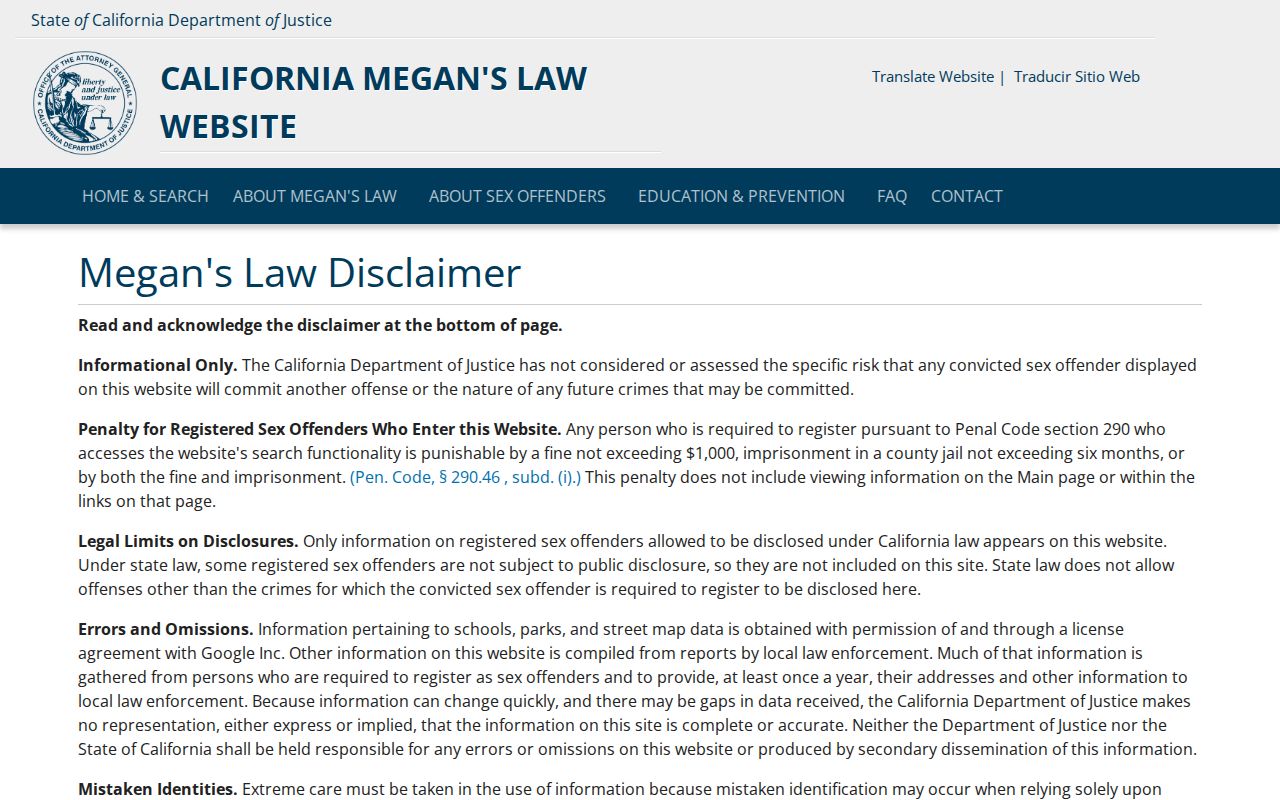
A specialized registry must be read within its own law and warning, not treated as a general resident roll.
Historical Paso Robles Directory Trails
The verified regional city-directory guide identifies San Luis Obispo and Paso Robles volumes for 1954, 1956, 1957, 1958, and 1960 on Gale reels 35 through 37, with gaps in 1955 and 1959. The guide confirms years and place coverage but not a complete publisher list or a full Paso Robles shelf inventory. The Historical Society asks researchers to call 805-238-4996 or email pasohistory1@gmail.com before relying on an unconfirmed volume.
A directory entry may offer a name, address, occupation, spouse notation, telephone, or street-order clue, but the exact field set varies by volume. The Library of Congress city-directory guide explains the common alphabetical, street-address, telephone, and criss-cross arrangements. For the full historical shelf, visit the Virginia Peterson Research Library; for modern address work, keep the parcel and deed chain in separate notes.
Note: The local collection confirms the research path, while a volume-level inventory must be checked with the Society before a year or publisher is treated as certain.